Five War Stories You Can Still Visit - Even If They Never Happened
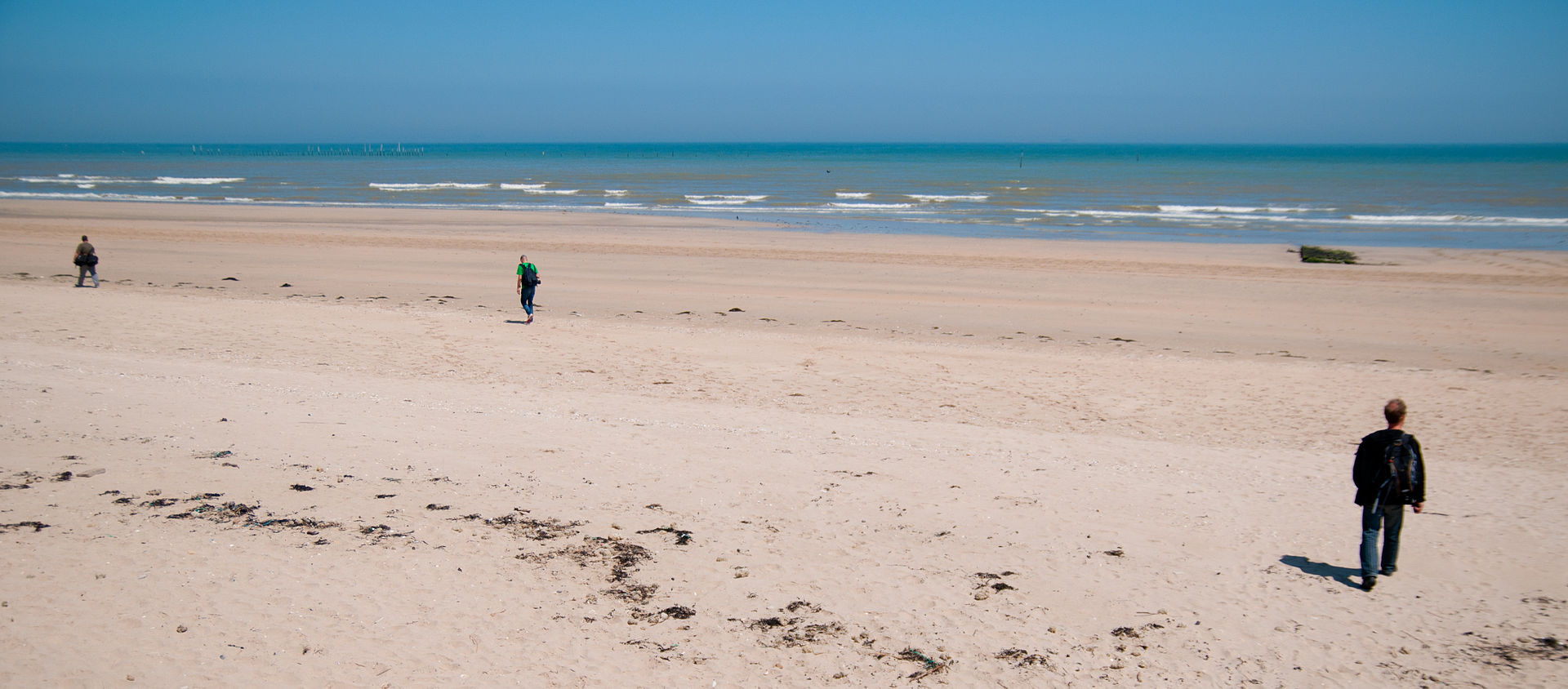
Header: Utah Beach, Normandy, France, a quiet shoreline where history is not immediately visible. Photo by Archangel12 (CC BY 2.0).
There is a certain kind of story that refuses to die.
Not because it is true, but because it feels true.
Across Europe, especially on the battlefields of the early 20th century, these stories have settled into the landscape. They are remembered in statues, shared in guidebooks, and retold in classrooms. Some are comforting. Others are unsettling. All of them reveal something deeper than fact alone ever could.
And the remarkable thing is this: you can still stand where these stories are said to have happened.
Even when they didn’t.
The Football Match That Never Happened
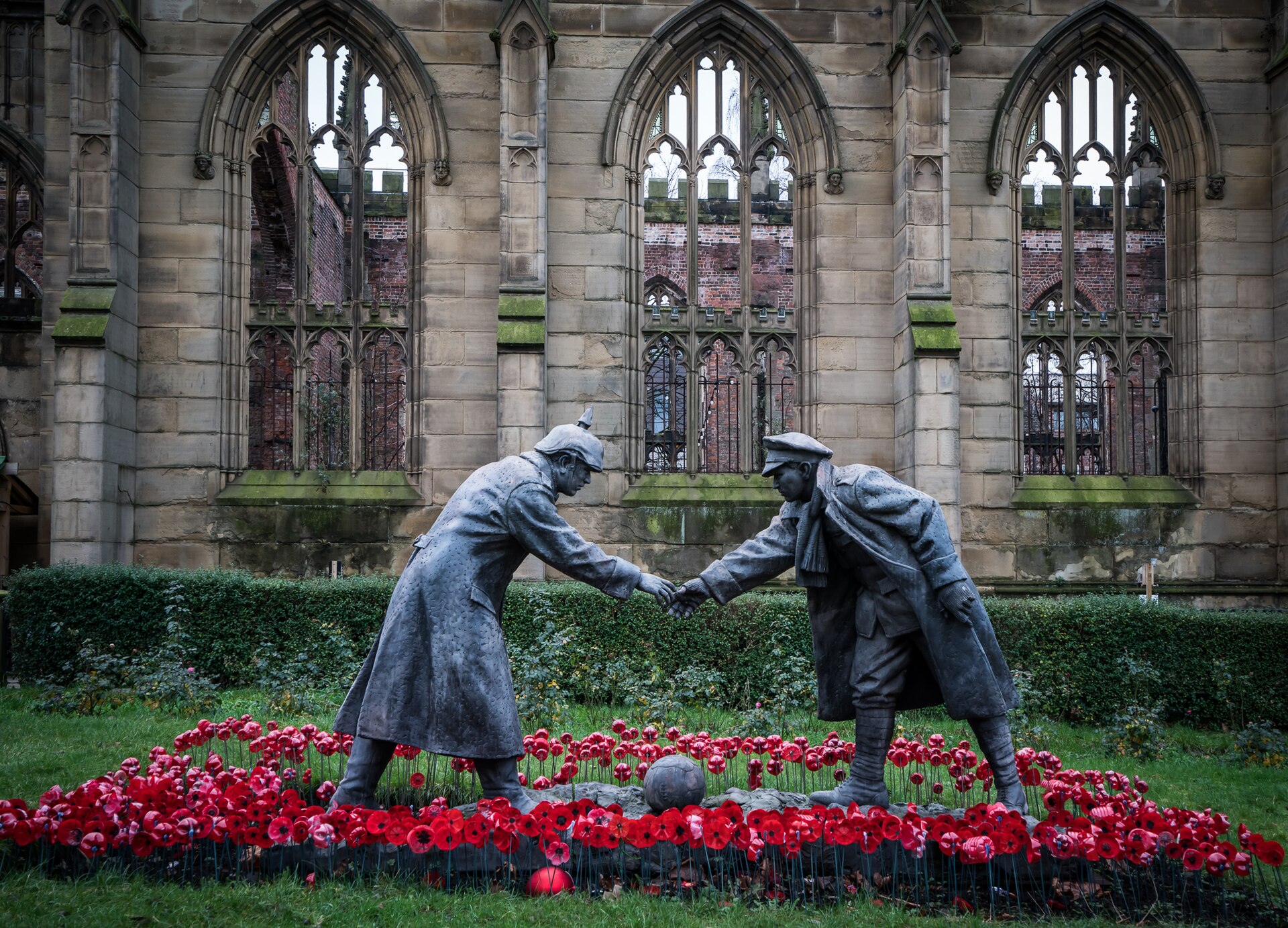
Christmas Truce Sculpture, "All Together Now," Liverpool – Photo by Brian Deegan (CC BY-SA 2.0)
It is one of the most enduring images of the First World War: British and German soldiers climbing out of their trenches, meeting in the middle, and playing a friendly football match.
The story is powerful. It suggests that even in one of history’s most brutal conflicts, humanity found a way through.
But historians have found no evidence of an organized match. There were moments of fraternization, certainly. Songs were shared, photos exchanged, perhaps even improvised kickabouts - but not the structured game so often described.
And yet, the story remains.
In the Ypres Salient, you can visit memorials and statues that commemorate this moment. They stand not as records of a match, but as monuments to what people wish had happened.
Walking these fields, you begin to understand how memory reshapes history. The silence of the landscape contrasts sharply with the stories we tell about it.
The Crucified Canadian Soldier
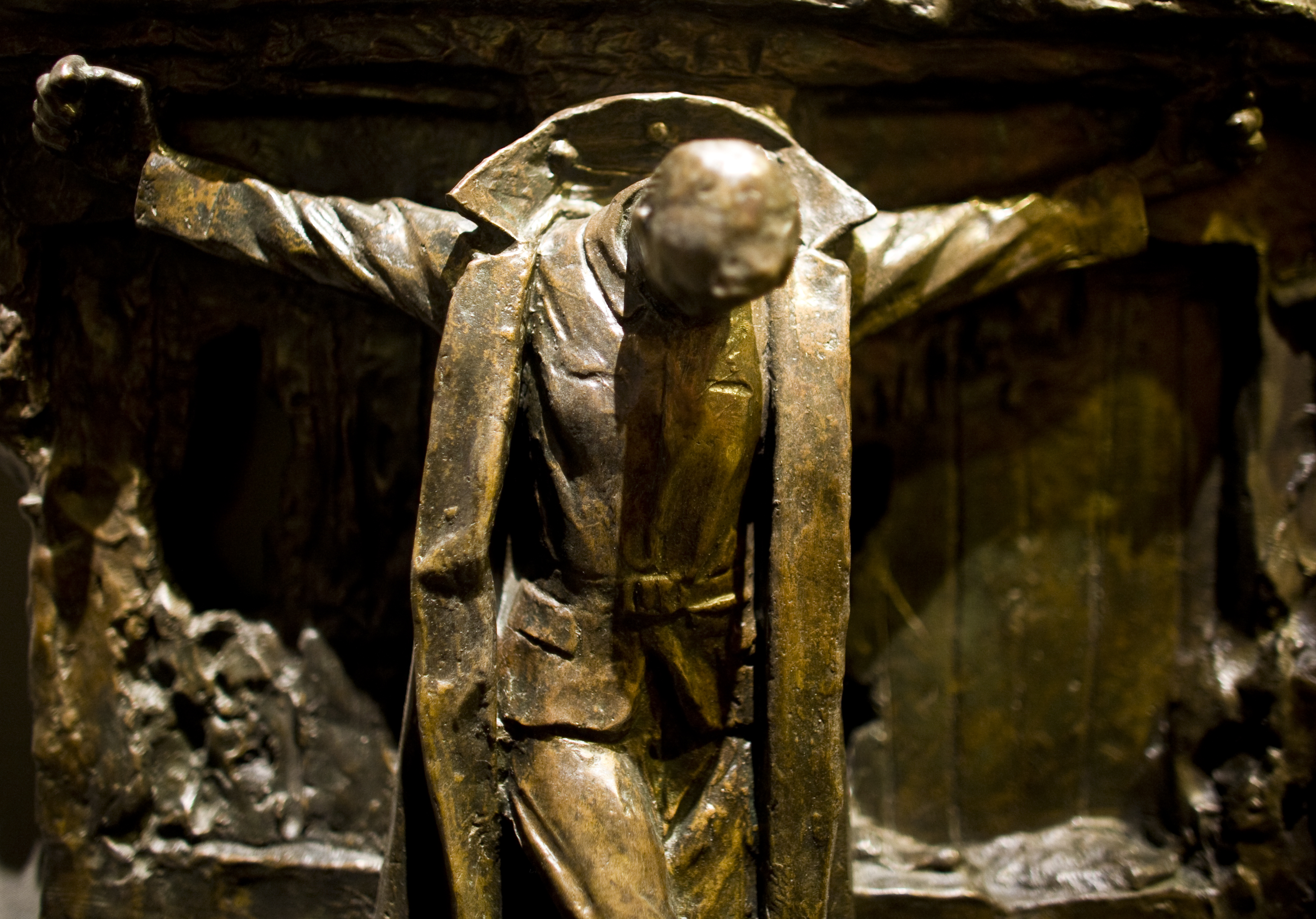
Canada’s Golgotha, 1918, by Francis Derwent Wood, Canadian War Museum. Photo by Owen Byrne (CC BY 2.0).
During the war, reports spread that German soldiers had crucified a Canadian prisoner.
The story was shocking and effective. It circulated widely in Allied newspapers and became a symbol of German brutality.
There is no credible evidence that it ever occurred.
Yet the story did not remain confined to rumor. It entered culture. Sculptures such as Canada's Golgotha by Francis Derwent Wood gave physical form to the idea, depicting a crucified soldier surrounded by jeering enemies. Today, the piece can be seen at the Canadian War Museum.
Standing in places like Tyne Cot Cemetery or Étaples Military Cemetery, the need for myth begins to fall away. The scale of loss is no longer abstract. It is immediate and visible, and far more powerful than any story created to explain it.
The Angels of Mons
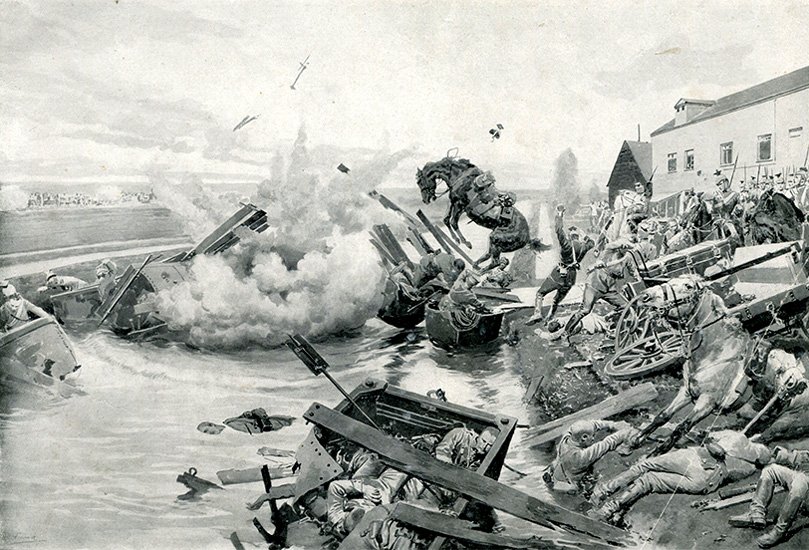
Battle of Mons, 1914, illustration by Fortunino Matania, originally published in The Washington Times, September 20, 1914, depicting the chaotic conditions from which the “Angels of Mons” legend later emerged. Public Domain.
In 1914, as British forces retreated from Mons, stories began to circulate: angelic figures had appeared on the battlefield, shielding soldiers from German advance.
The origin of the story can be traced to a piece of fiction written by Arthur Machen. It was never intended as fact.
But readers believed it. And once they did, the story took on a life of its own.
Today, Mons is a quiet, modern city. Its streets and memorials offer little hint of divine intervention, but they do invite reflection.
In Mons, it becomes clear how quickly myth can emerge in moments of fear, and how deeply people need meaning in chaos.
The “Russian Steamroller”
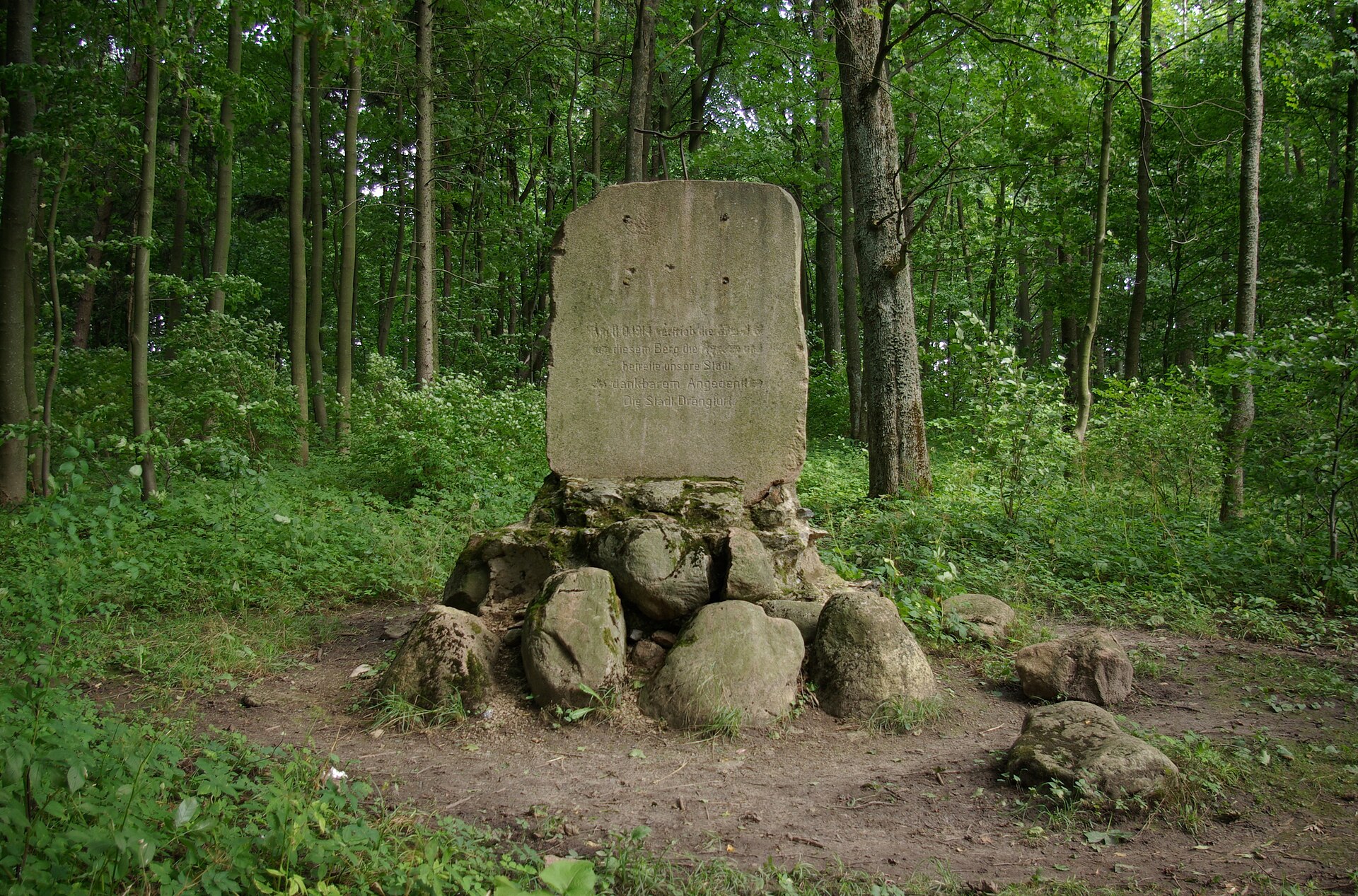
1924 German memorial near Srokowo, Poland, commemorating the 1914 victory over Russian forces at Diabla Góra, one of the places where the feared Russian "steamroller" stalled on the Eastern Front. Photo by Janericloebe / Public Domain.
At the start of the war, many believed Russia possessed an unstoppable army - a vast force that would roll west and crush Germany.
The reality was very different.
Russian forces were defeated decisively at Battle of Tannenberg, and again at the First Battle of the Masurian Lakes.
The “steamroller” was never real, but the fear of it was.
Civilians fled. Armies repositioned. Decisions were made based on a belief that did not reflect reality.
In northeastern Poland, the terrain is calm, almost deceptively so. Lakes, forests, and open fields hide the memory of panic and miscalculation that shaped the early war. Memorials dot the land, a reminder of how quickly perception can shape decision-making.
The Myth of the Invincible Maginot Line
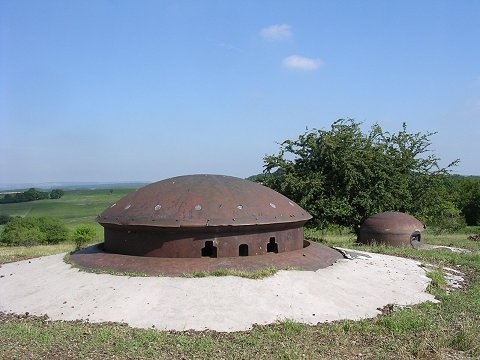
Maginot Line mixed weapons turret in eastern France, part of the fortification system once believed to be impenetrable before German forces bypassed it in 1940. Photo by Association des Amis de la Ligne Maginot d’Alsace (CC BY-SA 3.0).
Between the wars, France built one of the most formidable defensive systems in history: the Maginot Line. To the public, it represented security, permanence, and protection.
But when war came in 1940, German forces simply went around it.
The myth was not that the fortifications were weak. They were not. The myth was that they made France untouchable.
Today, many of these forts are open to visitors.
You can descend into them. Walk the tunnels. Stand beside the guns that never fired as intended.
Few places illustrate the gap between expectation and reality more clearly than the Maginot Line. Generals often prepare for the last war, but nowhere is that more visible than at the Maginot Line.
What These Places Actually Teach Us
These stories are not just about what didn’t happen.
They are about why people believed they did.
They reveal fear, hope, propaganda, and the human need to impose meaning on chaos. When you stand in these places - the field where a football match never happened, for instance, or looking out from a Maginot Line fort - that realization becomes immediate in a way no textbook can replicate.
This is the difference between learning history and experiencing it.
If You Want to Stand There Yourself
Europe’s battlefields are not just sites of past events. They are landscapes shaped by memory, interpretation, and sometimes, misunderstanding.
That is exactly what makes them worth visiting.
If you want to experience these places for yourself, not just read about them, we can help you plan a journey that brings these stories into focus.
In the meantime, read our article on why it is important for teachers to be there when students experience historical sites. Alternatively, read about common travel mishaps and how to handle them when plans inevitably change.
Bringing These Stories Into Your Classroom and Beyond
At Storied Sojourns Travel, we believe travel becomes most meaningful when it connects people directly to the places where history unfolded. From battlefields and memorials to cafés, museums, artistic districts, and hidden corners of Europe, these locations help students and travelers experience history as something lived rather than simply remembered.
This itinerary could include:
memorials connected to the Christmas Truce and the “Angels of Mons”
Eastern Front landscapes shaped by fear, rumor, and propaganda
preserved fortifications along the Maginot Line
battlefields where memory and history do not always align
memorial sites tied to resistance, censorship, and cultural transformation
If you are interested in building a historically focused journey through Europe, Storied Sojourns can help design an experience tailored to your students, curriculum, or interests.