Traveling to Ireland for Púca Festival: What to Know and How to Plan
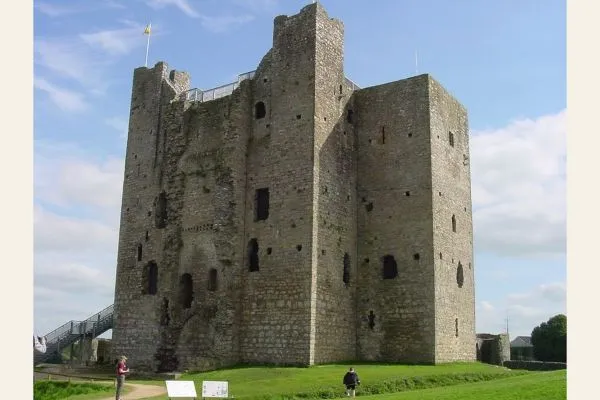
Header: The imposing medieval keep of Trim Castle in County Meath, one of the historic settings associated with Ireland's Púca Festival. Photograph by Scott Rick.
When you think of Halloween, what comes to mind? Costumes, jack-o'-lanterns, haunted houses, and trick-or-treating?
Perhaps you imagine the streets of Salem, Massachusetts, or the elaborate Halloween celebrations of New Orleans. But what if you could travel somewhere that brings you closer to the ancient traditions from which Halloween emerged?
Welcome to Ireland's Púca Festival.
Each autumn, in the historic landscapes of County Meath, Ireland celebrates its rich folkloric heritage with a festival inspired by Samhain (pronounced SOW-in), the ancient Gaelic festival marking the transition from harvest season into winter.
For travelers fascinated by history, mythology, and the stories that shape our cultures, Púca offers something rather different from the typical Halloween experience. Here, atmospheric celebrations of music, storytelling, and folklore unfold amid medieval towns and landscapes associated with Ireland's ancient past.
And if you're considering an Irish adventure, it might be the perfect reason to visit.
Before Halloween, There Was Samhain
Long before Halloween became associated with candy, costumes, and horror films, communities across Gaelic Ireland observed Samhain.
Traditionally associated with the beginning of November, Samhain marked an important turning point in the agricultural year. The harvest was ending, winter was approaching, and the darker half of the year was beginning.
It was also a time surrounded by supernatural traditions.
In Irish folklore, Samhain was associated with a thinning of the boundaries between the human world and the Otherworld. Spirits and supernatural beings occupied an especially prominent place in the stories told about this season.
Although the relationship between ancient Samhain observances and modern Halloween is more complicated than popular accounts sometimes suggest, Samhain remains an important part of Halloween's historical background. Halloween developed through centuries of cultural and religious change, incorporating traditions from Ireland, Scotland, and elsewhere.
Today, Púca Festival draws inspiration from this heritage, celebrating Ireland's distinctive contributions to the customs and stories we associate with Halloween.
And the festival's name offers an intriguing introduction to that world.
What Exactly Is a Púca?
The púca is one of the more fascinating creatures of Irish folklore.
A supernatural shapeshifter, the púca appears in traditional stories in several forms, frequently taking the shape of an animal, such as a horse, goat, or hare.
Depending on the tale, it might be mischievous, frightening, helpful, or thoroughly unpredictable.
Unlike the straightforward villains of many modern horror stories, the púca resists easy classification. It belongs to a world in which supernatural beings are not necessarily good or evil, and encounters with them can be as bewildering as they are dangerous.
It is a fitting symbol for a festival celebrating the mysterious and occasionally unsettling traditions of Samhain.
Rather than recreating ancient rituals, Púca Festival draws upon these stories to create a contemporary cultural experience.
Think less conventional Halloween party and more celebration of Ireland's supernatural imagination.
Two Historic Towns, One Extraordinary Setting
One of Púca Festival's greatest attractions is its setting.
The festival has been closely associated with two historic County Meath towns: Trim and Athboy. Each offers a different connection to Ireland's past.
Trim: Medieval Ireland Comes Alive
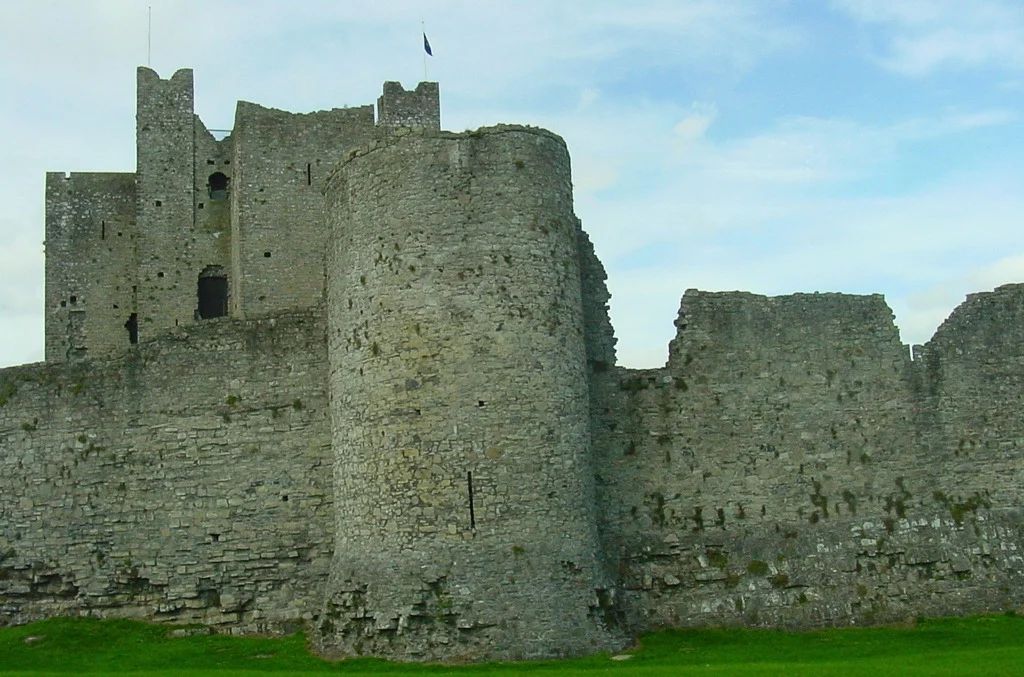
The imposing medieval walls and towers of Trim Castle in County Meath, Ireland, provide a dramatic setting for the Púca Festival. Photograph by Scott Rick.
If you love medieval history like I do, Trim is worth visiting regardless of the festival.
The town is dominated by the extraordinary Trim Castle, one of Ireland's most impressive surviving Anglo-Norman fortifications.
Construction began in the late twelfth century under Hugh de Lacy and his successors, following the Anglo-Norman invasion of Ireland. Its imposing stone walls and distinctive keep provide a remarkable introduction to the country's medieval history.
The town's medieval character also makes it an atmospheric setting for Púca's performances and celebrations.
Imagine spending your afternoon exploring a medieval castle before enjoying an evening of Irish storytelling, music, and Halloween festivities.
Athboy: A Landscape Connected to Samhain
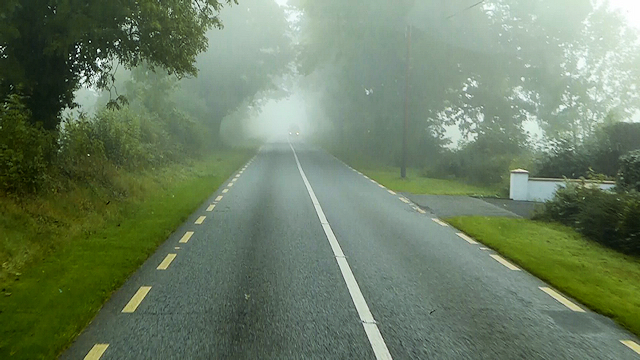
A mist-shrouded stretch of the N51 near Athboy, County Meath. The atmospheric landscape evokes the mystery and folklore surrounding Samhain and the nearby Hill of Ward (Tlachtga). Photograph: David Dixon / Geograph, CC BY-SA 2.0.
A short journey from Trim brings you to Athboy, another town with deep historical associations.
Nearby stands the Hill of Ward, also known as Tlachtga, a site traditionally connected with Samhain.
According to medieval Irish literary traditions, Tlachtga was associated with important seasonal gatherings and fires. Over time, the site became closely linked with accounts of Samhain celebrations.
It is important to distinguish between what archaeology and historical sources establish and what later folklore and modern interpretations suggest. We cannot reconstruct precisely how Samhain was celebrated at Tlachtga in antiquity.
Nevertheless, the site's place in Irish cultural memory is significant.
Standing amid the surrounding countryside, visitors encounter a landscape whose importance owes as much to the stories attached to it as to the physical remains themselves.
What Can You Expect at Púca Festival?
Púca is not simply a historical reenactment, nor is it a conventional Halloween attraction. It is a contemporary festival drawing upon Irish folklore, music, performance, and seasonal traditions.
Programming changes from year to year, but past festivals have featured a combination of:
Live music and performances: Celebrations featuring Irish musicians, entertainers, and other performers.
Storytelling and folklore: Opportunities to encounter the supernatural tales and legendary figures that make Irish folklore so distinctive.
Spectacle and atmosphere: Festival experiences incorporating dramatic imagery, theatrical performances, and the mysterious spirit of Samhain.
Food and local culture: Opportunities to enjoy Irish hospitality, regional flavors, and the atmosphere of historic County Meath.
Some festival activities may be free, while others require tickets. Check the official program for details.
Púca is an evolving festival. Its schedule, venues, and activities can change, so travelers should consult the official program before making firm arrangements.
Planning Your Púca Festival Adventure
A little advance planning can help you make the most of your visit to County Meath.
When Should You Visit?
Púca typically takes place in late October and early November, although dates and activities vary annually. Check the official festival website before making arrangements.
Allow three or four days to enjoy the festivities and explore nearby historical sites.
Where Should You Stay?
Trim and Athboy are natural choices, although accommodations may be limited during the festival. Book early, or consider staying in Dublin if you have reliable transportation for evening events.
What Should You Pack?
Expect cool, potentially wet autumn weather. Bring layers, waterproof clothing, and comfortable walking shoes, especially for outdoor events.
Beyond Púca: Exploring Ireland's Ancient East
County Meath is part of Ireland's Ancient East, a region rich in archaeological sites, medieval landmarks, and centuries of history. Beyond the festival, several nearby attractions are worth exploring.
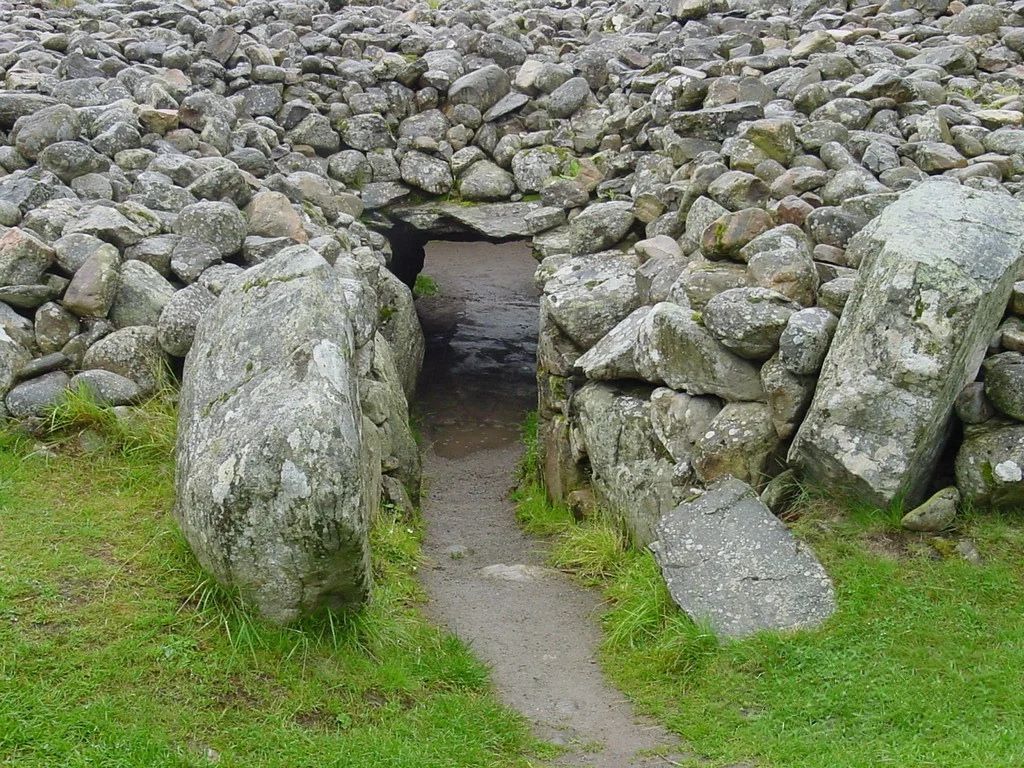
An ancient stone passage entrance in the Brú na Bóinne archaeological landscape of County Meath, Ireland, home to some of Europe's most remarkable prehistoric monuments. Photo by Scott Rick.
The Hill of Tara: Traditionally associated with Ireland's High Kings, Tara holds an important place in the country's mythology and political history.
Brú na Bóinne: A UNESCO World Heritage Site encompassing extraordinary prehistoric monuments, including Newgrange, Knowth, and Dowth, whose origins predate Stonehenge and the Egyptian pyramids.
Bective Abbey: The atmospheric ruins of a medieval Cistercian monastery offer a glimpse into Ireland's religious and architectural heritage.
Trim Castle: Beyond its role as a festival setting, this imposing fortress offers an opportunity to explore Ireland's Anglo-Norman past.
Together, these sites make Púca an appealing starting point for a longer journey through Ireland's history.
Will You Answer the Call of the Púca?
Ireland's Púca Festival offers more than a different way to celebrate Halloween. It invites visitors to explore the landscapes, history, and folklore that helped shape its traditions.
From the ancient monuments of the Boyne Valley to the medieval walls of Trim Castle, County Meath offers a journey through centuries of Irish history, with a little supernatural mystery along the way.
Traveling Through History, Not Around It
At Storied Sojourns Travel, we believe travel becomes most meaningful when it connects people directly to the places where history unfolded. From battlefields and memorials to cafés, museums, artistic neighborhoods, and overlooked corners of Europe, these locations help travelers experience history as something lived rather than simply remembered.
A journey built around these stories might explore:
Ireland's ancient Samhain traditions and the folklore surrounding Halloween
Medieval castles, historic towns, and archaeological sites throughout County Meath
Irish music, storytelling, seasonal celebrations, and regional cuisine
Nearby historic landmarks, including the Hill of Tara, Brú na Bóinne, and Bective Abbey
journeys designed around the stories and places most travelers never think to explore
If you are interested in discovering Europe through the history, culture, and overlooked stories that shaped it, Storied Sojourns can help design a journey built around the experiences that matter most to you.