5 More European Cities That Defined the Interwar Era (1919–1939)
Originally published in 2025. Updated for the Storied Sojourns relaunch.
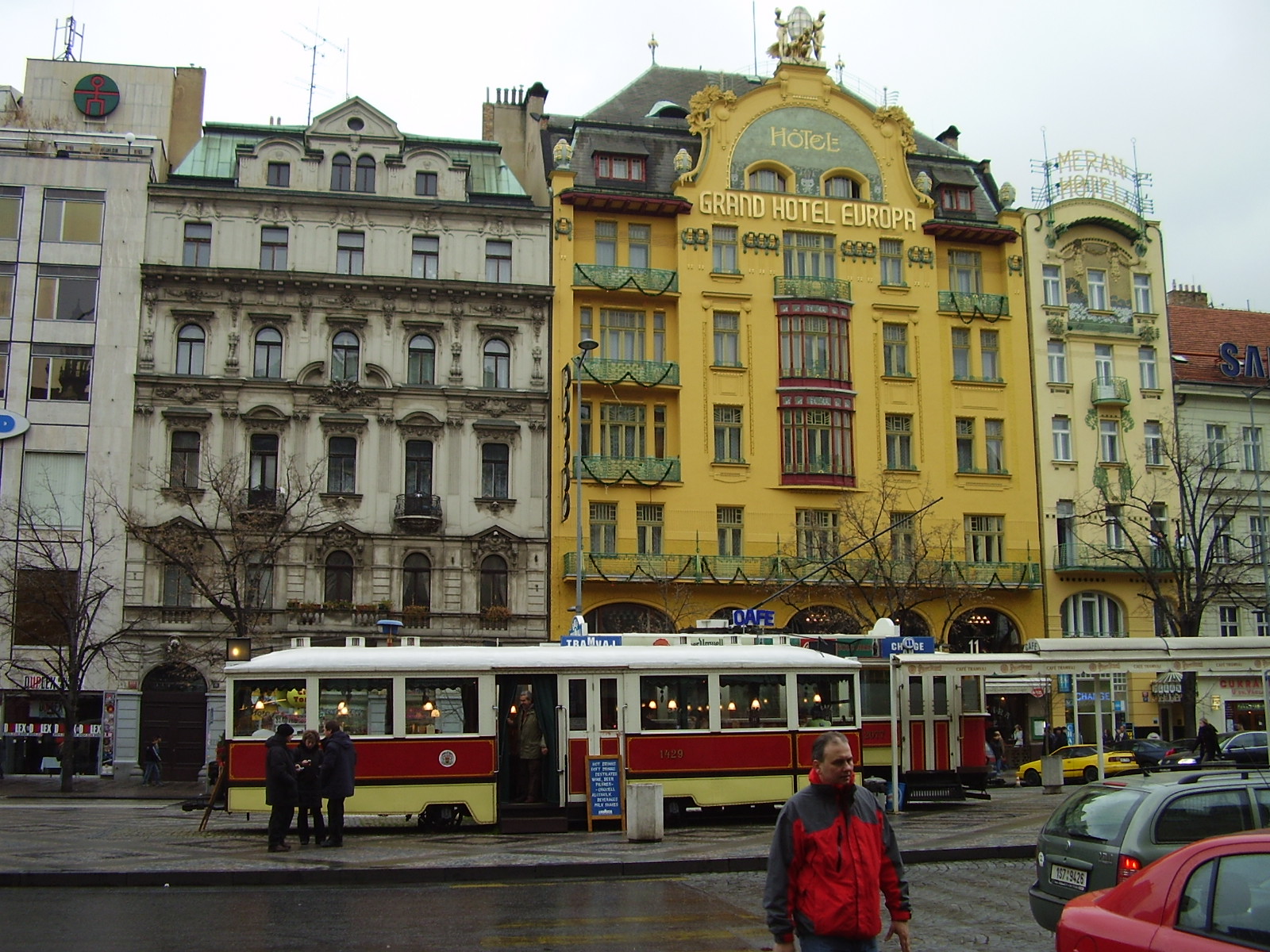
Header: Grand Hotel Europa and a historic Prague tram on Wenceslas Square, illustrating the architectural elegance, urban culture, and public transportation networks that helped define Central European city life during the early twentieth century. Photo by Wizzard (Public Domain).
Europe between 1919 and 1939 was a continent suspended between renewal and rupture. The collapse of empires and the redrawing of borders created new states, new capitals, and new cultural centers, each grappling with the promises and pressures of modernity. This period witnessed daring experiments in democracy, architecture, design, and urban planning, alongside breakthroughs in education, psychology, and the arts. At the same time, economic instability, political radicalization, and unresolved wartime grievances steadily eroded that fragile optimism.
The interwar period was not simply an interval between two wars. It was the decisive moment in which much of modern Europe took shape.
In certain European cities, the interwar years left an especially deep imprint. These cities became laboratories of national identity, social reform, and artistic innovation. Functionalist housing projects, avant-garde theaters, modern universities, and vibrant café cultures emerged alongside political activism, underground movements, and, in some cases, looming occupation.
For students, educators, homeschool families, and culturally minded travelers, engaging with these cities offers a rare opportunity to see how ideas translated into lived experience. Streets, buildings, and neighborhoods from the interwar era remain remarkably intact, allowing visitors to trace how societies rebuilt themselves, debated their futures, and struggled to safeguard democracy in an increasingly unstable world.
In this guide, we explore five more European cities whose interwar legacies are essential to understanding how Europe navigated the uncertain years between the wars, and why those years still matter today.
Prague, Czech Republic - A Model of Democratic Modernity

The grave of Czech writer Karel Čapek and actress Olga Scheinpflugová at Vyšehrad Cemetery in Prague. Čapek was one of the leading intellectual voices of interwar Czechoslovakia and is credited with popularizing the word “robot.” Photo by Nenea hartia (CC BY-SA 4.0).
The First Czechoslovak Republic (1918–1938) stood out as a successful, stable democracy in a period marked by rearmament, dictatorship, and political unrest. Prague reflected this confidence through its architecture, urban planning, and intellectual life.
Walking through Prague, travelers encounter elegant functionalism in residences, exhibition halls, and public buildings, reflecting a democratic state confident enough to express modernity through clarity, rationality, and openness rather than through monumentality or spectacle. The Trade Fair Palace and the minimalist Villa Müller illustrate the city’s embrace of clean lines, efficient design, and modern civic identity.
Prague was also home to Karel Čapek, who coined the word “robot” and explored questions of technology, ethics, and humanity, themes that continue to resonate as artificial intelligence advances.
Prague’s interwar years exemplify a society seeking to modernize while retaining a rich cultural heritage.
Kaunas, Lithuania - Europe’s Hidden Interwar Treasure

View of Kaunas Old Town in Lithuania. During the interwar period, Kaunas was known as “Little Paris” for its vibrant cultural, architectural, and academic life, as well as its flourishing café culture. Photo by BigHead (CC BY-SA 4.0).
When Vilnius was lost to Poland after WWI, Lithuania moved its capital to Kaunas, transforming a small provincial city into the political, cultural, and architectural heart of the nation. What followed was one of the most ambitious interwar urban development programs in Europe, compressed into less than two decades as the young state raced to build institutions, identity, and legitimacy almost from scratch.
Kaunas blossomed with modernist buildings that still shape the skyline today, many erected with remarkable speed in the 1920s and early 1930s as architecture became a tool of national urgency. Landmarks like the colossal Resurrection of Christ Church, the modernist Officers’ Club, and the striking Central Post Office reflect a confidence and creativity rarely found so intact.
Today, Kaunas is a UNESCO World Heritage Site recognized specifically for its interwar modernism, making it one of the best-preserved architectural “time capsules” of the era.
Walking through Kaunas today, travelers can still experience the atmosphere of a young nation attempting to define itself through modern architecture, civic ambition, and cultural confidence.
Kaunas teaches travelers how architecture can express national identity, pride, and modern aspirations during periods of political uncertainty.
Warsaw, Poland - Rebirth, Modernity, and a Diversity Lost

Aerial view of Thomas Woodrow Wilson Square in Warsaw, named after the 28th President of the United States, whose support for Polish independence made him widely admired in interwar Poland. The square reflects Warsaw’s ambitious urban planning and modernist architecture during the rebirth of the Polish state. Photo by Emptywords (CC BY-SA 4.0).
Interwar Warsaw was a city reborn. After regaining independence in 1918, Poland poured energy into rebuilding its capital, turning Warsaw into a lively metropolis rich in modernist architecture, political activism, and vibrant Jewish culture.
The Prudential House, completed in 1933, soared above the skyline as one of the tallest skyscrapers in Europe, symbolizing Warsaw’s modern ambitions. Many of the city’s Art Deco districts, particularly in Śródmieście and Żoliborz, still retain much of their interwar character today.
But the heart of interwar Warsaw was its diversity. Jewish theatres, cafés, bookshops, and schools created one of Europe’s most remarkable cultural ecosystems, much of which was later destroyed during the Holocaust and the Second World War. Today, memorials, museums, and surviving fragments of these neighborhoods help travelers understand both what was lost and what endured.
Warsaw is a powerful reminder of how culture and innovation can thrive despite political threats, and how fragile that progress can be.
Amsterdam, Netherlands - Tolerance, Design, and the Seeds of Modern Dutch Identity

The Stedelijk Museum in Amsterdam, home to major collections of De Stijl, Bauhaus, Pop Art, and other modern artistic movements. The museum reflects the Netherlands’ long connection to experimental design and interwar cultural innovation. Photo by John Lewis Marshall (CC BY-SA 4.0).
In the interwar years, Amsterdam continued its long tradition of tolerance and creativity. The city became a haven for artists, refugees, and intellectuals seeking a more open environment than those increasingly found in Germany and parts of Eastern Europe.
This was also the golden age of the De Stijl movement, led by creators such as Piet Mondrian and Gerrit Rietveld. Their radical use of bold colors, geometric shapes, and minimalist design profoundly influenced global architecture, art, and design. Many of these artistic and architectural influences remain visible today in Amsterdam’s museums, galleries, and modernist spaces.
Amsterdam’s Jewish communities flourished during this era, and the story of Anne Frank, though shaped by the events of WWII, has its roots in the interwar years, with her family’s relocation from Germany in response to growing antisemitism. Visiting the Anne Frank House provides crucial context for understanding both the vibrancy of pre-war Jewish life and the looming threat that eventually engulfed it.
Amsterdam embodies the cosmopolitan creativity of the interwar period and the cultural optimism that existed before occupation.
Brno, Czech Republic - A Small City With a Major Architectural Voice

Villa Tugendhat in Brno, designed by Ludwig Mies van der Rohe and completed in 1930, is one of the most influential examples of interwar functionalist architecture in Europe. Its open floor plan and minimalist design helped redefine modern architecture. Photo by Daniel Fišer (CC BY-SA 3.0).
Brno may not have the global fame of Prague or Vienna, but in the interwar years it stood at the forefront of functionalism, demonstrating that architectural leadership in interwar Europe was not confined to imperial capitals or political centers. Emphasizing efficiency, clarity, and rational design, functionalist architects transformed Brno into a laboratory of bold experimentation.
The most famous example is the Villa Tugendhat, a UNESCO-listed masterpiece designed by Ludwig Mies van der Rohe. Its open floor plan, floor-to-ceiling glass, and innovative use of materials made it decades ahead of its time. The city’s Exhibition Centre, built in the 1920s, remains one of the largest functionalist complexes in Europe.
Walking through Brno today, travelers encounter a city where interwar modernism remains woven into the urban landscape rather than isolated within museums or preserved districts.
Brno demonstrates that smaller cities played a major role in shaping modern architecture and design. Its interwar buildings are among the finest in the world, offering a unique perspective on European modernism.
Why These Interwar Cities Matter Today
The interwar period was a defining era, a time of reconstruction, experimentation, and cultural confidence, but also one marked by political fragility, social division, and the steady rise of authoritarianism. Exploring interwar cities helps travelers understand:
how new and restored democracies attempted to rebuild after imperial collapse and war
how architecture, urban planning, and culture responded to rapid political and social change
how nationalism, minority identity, and modernism shaped everyday life
how fragile, and how hard-won, freedom and creativity can be
In Prague, Kaunas, Warsaw, Amsterdam, and Brno, the interwar years are not abstract history. Functionalist villas, social housing projects, cafés, civic buildings, and memorial spaces allow visitors to experience how societies sought stability, meaning, and modern identity in an uncertain age. These cities reveal both the optimism of the period and the vulnerabilities that would soon be exploited.
Walking these streets brings the interwar years into focus, not as a distant prelude to catastrophe, but as a lived moment filled with ambition, debate, creativity, and unresolved tension.
Bringing These Stories Into Your Classroom and Beyond
At Storied Sojourns Travel, we believe travel becomes most meaningful when it connects people directly to the places where history unfolded. From battlefields and memorials to cafés, museums, artistic districts, and hidden corners of Europe, these locations help students and travelers experience history as something lived rather than simply remembered.
This itinerary could include:
functionalist neighborhoods and modernist landmarks in Prague, Brno, and Warsaw
cafés, theatres, and cultural spaces tied to interwar intellectual and artistic life
museums and galleries connected to movements such as De Stijl and European functionalism
memorials and preserved districts that reveal both the creativity and fragility of interwar society
memorial sites tied to resistance, censorship, and cultural transformation
If you are interested in building a historically focused journey through Europe, Storied Sojourns can help design an experience tailored to your students, curriculum, or interests.