Five European Summer Festivals Where History Still Shapes the Celebration
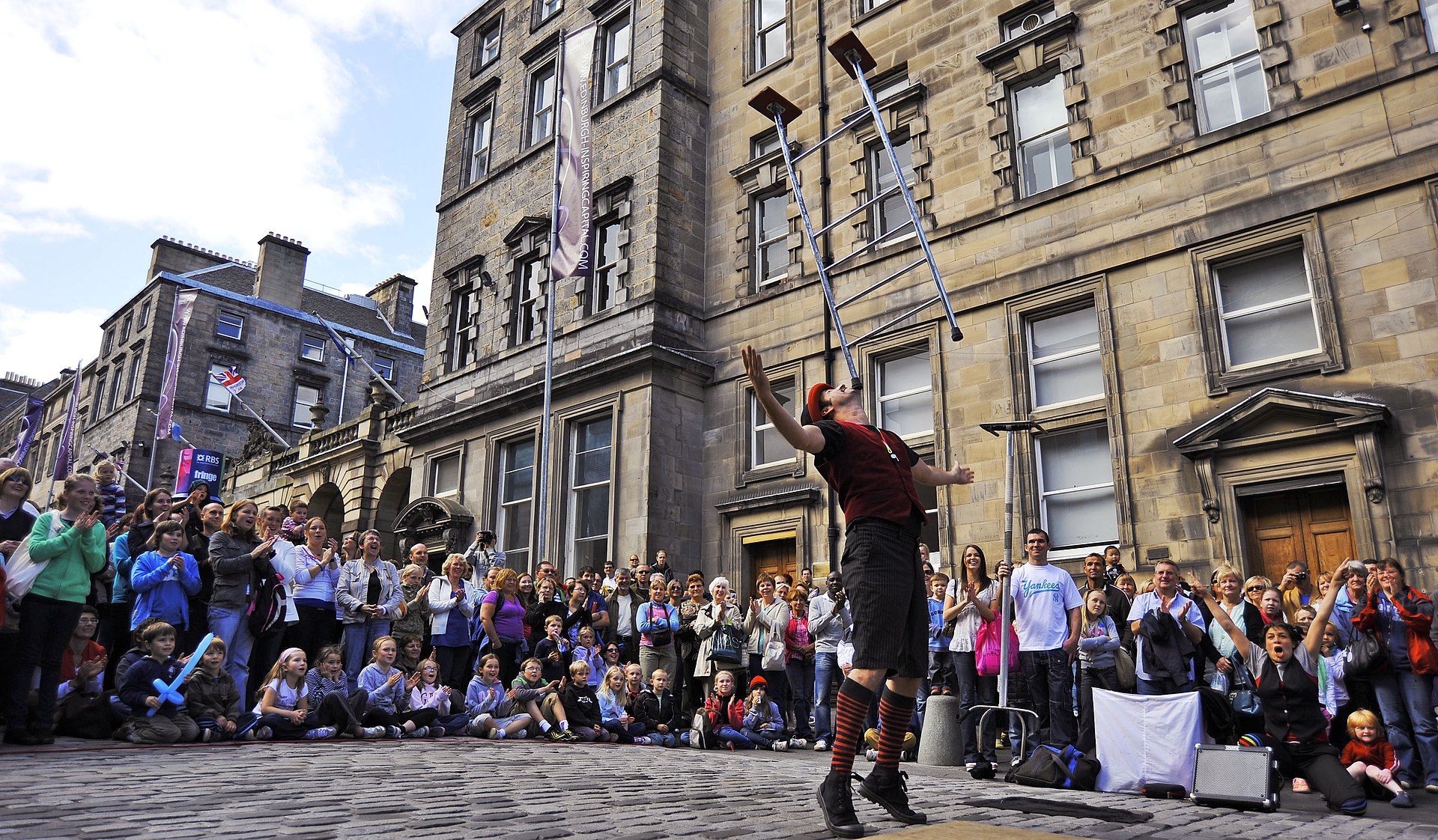
Header: Crowds gather along Edinburgh’s historic Royal Mile during the Edinburgh Festival Fringe, where one of Europe’s largest arts festivals unfolds within a city deeply shaped by centuries of cultural and political history. Photo by Festival Fringe Society (CC BY-SA 3.0).
For many travelers, one European festival tends to stand above all others: Oktoberfest. Munich’s famous beer festival has become one of Europe’s most recognizable cultural exports, drawing visitors from around the world each year.
Across Europe, festivals are woven into landscapes shaped by centuries of conflict, artistic reinvention, political transformation, and cultural memory. Some began as acts of celebration. Others emerged in direct response to war, dictatorship, or societies forced to redefine themselves.
Summer, in particular, offers travelers the opportunity to experience Europe not simply as a collection of destinations, but as a continent where history continues to shape the ways people gather, celebrate, and express identity.
For travelers interested in experiencing Europe beyond traditional sightseeing, these five summer festivals offer a different way of understanding the places they visit.
Edinburgh Festival Fringe
Where postwar Europe learned to laugh again

Street performers bring the Edinburgh Festival Fringe into the city’s public spaces each summer, continuing a tradition of artistic expression that has helped define postwar cultural life in Scotland’s capital. Photo by Quejaytee (CC BY-SA 4.0).
Every August, Edinburgh transforms.
The narrow streets of the Old Town fill with performers, comedians, musicians, actors, and artists from around the world. Pop-up performances appear in courtyards, church basements, pubs, university lecture halls, and along the crowded stretch of the Royal Mile. What begins as a festival quickly feels like something larger: an entire city surrendering itself to creativity.
Yet the Edinburgh Festival Fringe’s origins reveal something deeper.
In 1947, only two years after World War II’s end, the newly created Edinburgh International Festival sought to rebuild cultural connections across a Europe still recovering from devastation. Eight independent theater groups arrived uninvited to perform alongside the official program.The Fringe was born almost by accident, and today stands as a powerful reminder that art often becomes part of recovery after conflict.
Visitors interested in looking beyond the performances can pair the festival with Edinburgh’s wartime history, the National War Museum, and Scotland’s often-overlooked role in both world wars.
For travelers planning ahead, this is one festival worthy of a journey entirely its own. Having stumbled upon it unexpectedly myself, I can say few festivals transform a city as completely as Edinburgh in August.
Festival d'Avignon
Rebuilding French culture after occupation

Street performances fill Avignon’s public spaces during the Festival d’Avignon, continuing a tradition of artistic expression that helped redefine French cultural life in the years following liberation. Photo by OT Avignon (CC BY-SA 4.0).
The city of Avignon has held a unique place in European history for centuries.
Medieval walls still surround the old city. The immense Palais des Papes stands as a reminder of Avignon’s centuries as the seat of papal authority. Every July, however, this historic setting becomes home to one of Europe’s most significant performing arts festivals.
Like Edinburgh’s Fringe, the Festival d’Avignon emerged in 1947. France was still reckoning with occupation, resistance, collaboration, and the challenge of redefining itself after liberation. Cultural institutions became part of that reconstruction, helping redefine how France understood itself in the years that followed.
Walking through Avignon during the festival means moving through several centuries simultaneously. Medieval architecture frames performances that speak directly to modern audiences.
It is a reminder that European history rarely stays confined to museums.
Tomorrowland
Celebration in the shadow of Europe’s battlefields

Tomorrowland’s surreal landscapes feel worlds away from history, yet only a short distance from the festival grounds lie the battlefields of Flanders, where the devastation of World War I permanently shaped modern Europe. Photo by Arroser (CC BY-SA 4.0).
At first glance, Tomorrowland seems entirely disconnected from history.
Massive electronic music stages. International crowds. Elaborate fantasy-inspired design. Tens of thousands of visitors gather for one of the world’s largest music festivals.
Yet geography tells a different story.
Few places in Europe were more profoundly shaped by the twentieth century than Belgium. Only a short distance from Tomorrowland lie the battlefields of Ypres, Passchendaele, and Flanders - places forever associated with the unimaginable destruction wrought by World War I.
Tomorrowland is not a historical festival. That is precisely what makes the contrast powerful.
Within a few hours, travelers can move between some of the most devastating battlefields in modern history and one of Europe’s most energetic celebrations of contemporary culture.
Europe is often defined by those contradictions. The past remains close, even when people gather to celebrate the present.
Sziget Festival
Freedom in a city repeatedly denied it

Festivalgoers gather during Sziget Festival in Budapest, a celebration that reflects Hungary’s post-communist embrace of openness, culture, and freedom. Photo by Derzsi Elekes Andor (CC BY-SA 4.0).
Budapest is one of Europe’s most historically layered capitals.
The Austro-Hungarian Empire. Fascist occupation. Soviet domination. The Hungarian Holocaust. The 1956 uprising. Decades of communist rule.
Modern Budapest is impossible to separate from its history.
That is exactly what gives the Sziget Festival its significance.
Held each August on Óbuda Island in the Danube, Sziget brands itself as the “Island of Freedom.” While the festival itself only began in 1993, its symbolism reflects Hungary’s attempt to redefine itself after decades spent under authoritarian rule.
Unlike some festivals rooted directly in the first half of the twentieth century, Sziget reflects what came after - a celebration born from the freedoms Eastern Europe spent decades fighting to reclaim.
Visitors interested in understanding Budapest more deeply can pair the festival with the House of Terror Museum, the Shoes on the Danube Bank memorial, or the city’s many sites connected to occupation, repression, and resistance.
Here in Budapest, celebration itself becomes a reminder of how difficult freedom can be to reclaim.
San Fermín
Experiencing Spain on the edge of transformation

Traditional giant figures parade through Pamplona during the San Fermín Festival, a celebration whose rituals reflect centuries of regional identity and cultural continuity in northern Spain. Photo by San Fermin Pamplona Navarra (CC0 1.0 Public Domain).
Most travelers know the San Fermín Festival for a single image: the running of the bulls.
Each July, Pamplona fills with visitors drawn to a celebration deeply rooted in regional identity, ritual, and local tradition.
Yet for history-minded travelers, the location itself tells a larger story.
The Spain encountered by writers like Ernest Hemingway during the 1920s and 1930s was a country moving toward profound instability. Political polarization, social unrest, and ideological conflict would soon erupt into the Spanish Civil War.
Hemingway’s fascination with Spain helped introduce many Americans to places like Pamplona, but his writing also captured a country standing at the edge of transformation.
To experience San Fermín today is not simply to witness celebration. It is to stand in a place where twentieth-century Europe was inexorably moving toward one of the century's defining conflicts.
Final Thoughts
Festivals reveal something important about the places that host them.
They are not interruptions to history. In many ways, they are shaped by it.
In Edinburgh and Avignon, culture became part of Europe’s postwar recovery. In Belgium, celebration unfolds near battlefields that changed the twentieth century. In Budapest, freedom itself became part of public identity after decades of repression, and in Spain, tradition survives in places that once stood near the fault lines of political collapse.
Europe is experienced through monuments and museums. But sometimes understanding a place begins with seeing how people choose to celebrate there.
Traveling Through History, Not Around It
At Storied Sojourns Travel, we believe travel becomes most meaningful when it connects people directly to the places where history unfolded. From battlefields and memorials to cafés, museums, artistic neighborhoods, and overlooked corners of Europe, these locations help travelers experience history as something lived rather than simply remembered.
A journey built around these stories might explore:
Europe’s most remarkable summer festivals and cultural celebrations
historic cities where modern celebrations unfold against centuries of political and cultural change
festivals that allow travelers to experience Europe through art, music, and local tradition
destinations where celebration and history exist side by side in unexpected ways
journeys designed around the stories and places most travelers never think to explore
If you are interested in discovering Europe through the history, culture, and overlooked stories that shaped it, Storied Sojourns can help design a journey built around the experiences that matter most to you.